
A Warden's Guide

Culture Change In Detention Facilities

A Warden's Guide

Culture Change in Detention Facilities

Guide

Opening Letter

Dear Friend,

When I began my career in corrections, there was no handbook for culture change. In fact, the term “culture change” wasn’t part of our vocabulary, even though many of us intuitively knew something needed to change. Staff were working too hard, incarcerated people were struggling to be heard, and both were looking to me, as warden, for support. I knew I wanted to bring in more rehabilitative programs for the incarcerated population at my prison, because teaching them to be more productive and respect themselves would in turn make the prison safer for the staff.

The Great Wardens Project emerged from a commitment to advancing leadership practices that empower and support bold, visionary leaders within correctional institutions across the country. We recognized the importance of having a corrections culture that prioritizes safety, dignity, and respect for both staff and incarcerated people. We knew that corrections leaders — wardens and superintendents in particular — have a critical role in instilling those values in both the people who work in the facility and the people who live there. At the same time, it was clear that there was no roadmap for leaders to build such a culture, nothing that spelled out how it could be done.

As the Warden or Superintendent, it is possible to build a supportive community inside the walls of your facility. You have the power to set the tone of the institution. The way you communicate, the decisions you make, and your treatment of staff and incarcerated people serve as the model for everyone else. This is a tremendous responsibility, but it is also an incredible opportunity to positively impact the lives of the people in your facility.

I’ve seen remarkable transformations happen, both in facilities where I’ve worked and in those run by peers on the Great Wardens Task Force. The pages in this guide provide a template so that you too can create lasting, sustainable change. You’ll find insights into topics like accountability and communication, as well as tips and ideas on how to improve staff wellness and retention.

We hope this guide will be a valuable tool for you, and we encourage you to share it with others in positions of leadership, at your facility and beyond. Working together, we can uphold our duty as wardens to ensure our facilities are safer for everyone.

Sincerely,

DAWN S. DAVISON Warden (retired)

California Institution for Women

California Department of Corrections and Rehabilitation

and Chairperson, Board of Directors

Just Detention International

You as a warden have an ability to change the culture. They’re going to follow your lead. It doesn’t matter where you work, what prison, or where you’re at right now. If the culture is not what you’d like it to be, you can change it.
MARK S. NOOTH, EASTSIDE INSTITUTIONS ADMINISTATOR (RET.) Oregon Department of Corrections, and a member of the Great Wardens Task Force

1

Introduction

Wardens and superintendents¹ have a tremendous amount of authority. Their actions shape the culture and safety of large and complex institutions, where sometimes thousands of people live and work. This guide is for those wardens and superintendents who seek to build a healthier culture inside their facilities, but who also face resource limitations that make change seem impossible. The following pages contain the wisdom and lessons learned from current and former wardens and superintendents from facilities across the country. Each section analyzes a topic or challenge unique to corrections, explores strategies for implementing culture change, and provides examples of concrete steps wardens can take — all based on the experiences of wardens and other corrections leaders.

The aim of the guide is to give practical advice for wardens on how best to instill a set of principles that promote the safety and well-being of both their employees and the people in their custody. In addition, the end of each chapter contains guidance from corrections professionals, drawn from their experience in the field. Recognizing that no facility is the same, and that challenges differ across institutions, the advice we offer is meant to be adaptable, planting a seed for change that is rooted in what we have learned from working with leaders nationwide.

Why Culture Change — and Why Now?

The field of corrections currently faces a monumental staffing crisis. In 2022, the number of people working for state prisons hit its lowest mark in over two decades.² At the same time, the number of people being incarcerated has gone up. Staff are forced to work overtime, often in an increasingly chaotic facility environment. On top of feeling overworked, many staff feel unsafe at their jobs and generally do not think they are making a positive difference.³ The result is a workforce that suffers from stress, fatigue, and depression. Staffing problems also exacerbate other issues at facilities, including low morale, low program participation, and even a lack of safety. Understaffed agencies look to make cuts when accommodating for fewer staff, and often the first target is programming and visitation for incarcerated people. A situation with a population whose basic needs aren’t being met, combined with a workforce that has reached a breaking point, is ripe for conflict that impacts both staff and incarcerated people alike. Brian Dawe, National Director of One Voice United, an advocacy organization for corrections officers, puts it plainly: “We’re all in the same toxic environment.”⁴

Wardens and superintendents may see themselves as powerless to solve problems that often stem from staffing shortages, particularly when resources are limited. But as facility leaders, wardens do have the ability to influence facility culture and create a safer place for staff to work and for incarcerated people to live.

What Is Organizational Culture?

Organizational culture can be hard to define, but the simplest way to explain it is as a consistent pattern of behavior within a workplace. It is an understanding of the “what” and “why” of an organization that is shared by the people who work there. It is a collaborative and shared awareness of values and goals — of what is right and wrong. These values solidify into norms, creating expectations for how one should behave. Yet organizational culture is not static; it can shift in response to internal and external changes.

A number of factors influence corrections culture, including the agency’s mission and values, the people who live in the facility, the people who live in the surrounding community, and the broader political environment. Above all, the culture of a facility is shaped by the actions of the people who work there and the expectations of the people who lead them.

Leadership and Culture

In 2021, the Great Wardens Project conducted an anonymous survey with 150 corrections leaders on facility culture. The results were clear: staff shortages and staff retention had a significant impact on the facilities surveyed. Half of the respondents reported that the culture of their facility was a “mix of healthy and not healthy,” but more than half said that they felt empowered to make changes necessary to improve facility culture. Even though wardens may not be able to control hiring or budgets, they have a significant impact on a facility’s culture.⁵ Staff and incarcerated people alike look to facility leaders to set expectations and provide guidance. Wardens are role models for other corrections officials; the way a warden behaves and communicates sets the tone for the environment.
Assessing Workplace Culture

Understanding the current state of a facility’s culture is an essential component of the warden’s role. As facility leaders, wardens are always observing how staff perform their duties, how they interact and communicate with each other and with the people who are incarcerated, and how they present as corrections professionals. Wardens can identify patterns that may need to be addressed and ensure that responses are always fair and consistent. Wardens can also identify staff who have the potential to influence and create change — either positively or negatively. Incarcerated people also have an impact on a facility’s culture. When assessing overall culture, soliciting input from incarcerated people is essential, as they can offer a unique perspective and work collaboratively with staff to make change.

Culture Change Roadmaps

Culture change is difficult and takes time, and success is rarely linear. Even with a firm understanding of a facility’s culture and the underlying beliefs and assumptions that guide behavior, creating lasting change requires ongoing commitment. Finding a place to start can be overwhelming. Creating smaller and more attainable goals, developing a step-by-step plan for achievement, and setting measures for success can help start the process, track progress, and create results.

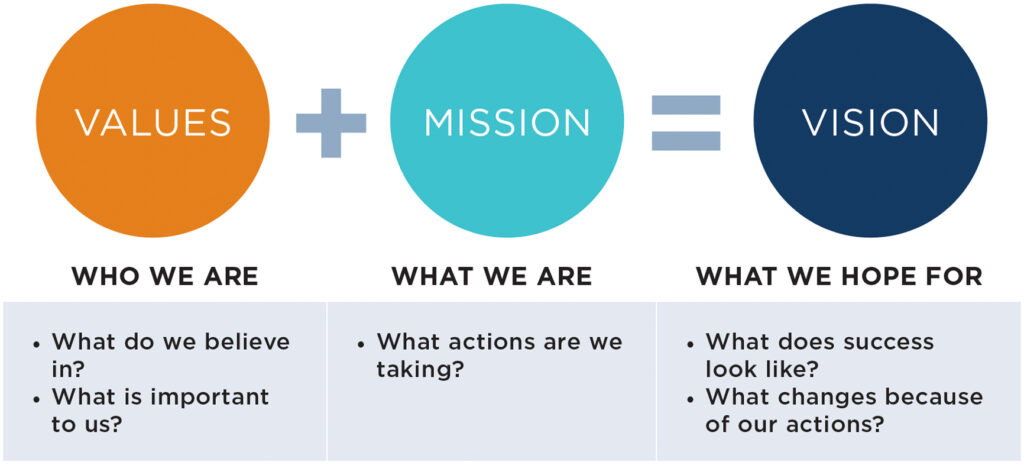
Achieving larger goals often requires a strategic plan — a comprehensive roadmap to carry out a facility or organizational mission. At the foundation of every strategic plan are a set of values, a mission statement, and a vision statement. Building on these foundational pieces, a strategic plan identifies short- or long-term goals that will lead to making the vision a reality and includes ways to measure success. Some facilities have mission statements that are tailored to fit the specific needs of their population and the kinds of services provided. In addition to a mission and vision, strategic plans may include analysis of the Strengths, Weaknesses, Opportunities, and Threats to success. A SWOT analysis, as these are commonly known, can help to clarify what the barriers are, and how to leverage strengths and opportunities to minimize those barriers.

Once the values, mission, and vision are identified, and any other analyses are completed, the next step is to name short- or long-term goals in service of creating change. Goal setting can present its own set of challenges, especially for a goal as complex as changing culture. For example, all wardens have the goal of ensuring safety for their staff and people in their custody, but what exactly does safety mean, and how can it be measured? The SMART goals framework can help clarify expectations and define success. SMART goals — Specific, Measurable, Achievable, Relevant, and Time-Bound — encourage the breaking down of larger objectives into smaller actions with clear measures for success.

Sometimes the biggest barrier to change is internal — low motivation, feeling powerless or even feeling hopeless. One tool designed specifically to strengthen motivation and overcome internal obstacles is the WOOP tool — Wish, Outcome, Obstacle, Plan. This approach encourages reflection on the things that are within someone’s control, and shows how to leverage existing control to achieve identified outcomes.

Many corrections agencies have agency-wide strategic plans that can be used as templates for creating facility-specific plans. Consider reviewing your agency’s strategic plan for inspiration, or refer to the American Jail Association’s guide to strategic planning. Whichever tools you use, the key is to identify realistic goals, to ensure that they contribute to your stated vision, and to be able to measure success along the way.

Leadership And Culture

The American Jail Association special report on strategic planning also has helpful guidance on creating a plan that works for your facility. It also contains examples of SMART goals and SWOT analysis (page 41): www.americanjail.org/files/Core%20Competencies/2017_JA_Core%20Competencies_Strategic%20Planning.pdf. To access the WOOP tool, visit: www.woopmylife.org

Sources

  1. For simplicity, this guide sometimes uses the term “wardens” rather than “wardens and superintendents” to refer to heads of institutions
  2. Shannon Heffernan and Weihua Li, “New data shows how dire the prison staffing shortage really is,” The Marshall Project, January 10, 2024, www.themarshallproject.org/2024/01/10/prison-correctional-officer-shortageovertime-data
  3. Ann E. Lerman, Officer Health and Wellness: Results from the California Correctional Officer (Goldman School of Public Policy, University of California, Berkeley, August 14, 2018), https://gspp.berkeley.edu/assets/uploads/research/pdf/executive_summary_08142018.pdf
  4. Heffernan and Weihua, ”New data shows how dire the prison staffing shortage really is,” The Marshall Project
  5. “The Great Wardens Project,” The Great Wardens Project, August 2021, www.greatwardens.org/wp-content/uploads/2022/01/SURVEY.pdf
  6. Vera Institute of Justice, “The Prison Experience for Corrections Staff,” in Reimagining Prison: Examining Prisons Today, www.vera.org/reimagining-prison-web-report/examining-prisons-today/the-prison-experience-for-corrections-staff
  7. Caterina G. Spinaris, Mission Critical: Correctional Employee Health and Wellness (Florence, CO: Desert Waters Correctional Outreach, 2020), https://desertwaters.com/wp-content/uploads/2021/03/2020_Spinaris_Correctional-Employee-Health-and-Wellness.pdf; The Desert Waters Correctional Outreach website, www.desertwaters.com, has plenty more helpful resources to help corrections agencies combat stress, including this Corrections Fatigue Assessment: https://eadn-wc01-13422485.nxedge.io/wpcontent/uploads/2024/01/CFA_Institutions_2024.pdf
  8. Ibid
  9. Daniel Shane, “Corrections Officers Suffer from PTSD at More than Double the Rate of US Military Veterans,” The Guardian, May 20, 2015, www.theguardian.com/us-news/2015/may/20/corrections-officers-ptsdamerican-prisons
  10. Spinaris, Mission Critical, 2020
  11. Drs. Caterina Spinaris and Nicole Brocato, Michigan Department of Corrections, MDOC Staff Well‑Being Report (Desert Waters Correctional Outreach, Gallium Social Sciences, and Michigan Department of Corrections, 2020), www.michigan.gov/-/media/Project/Websites/corrections/assets/Folder24/MDOC_Staff_Well-being_Report.pdf?rev=be4e9eed9510407aab03ce19bfcb39e1
  12. American Correctional Association, “Environmental Scan: Correctional Employee Wellness” (Alexandria, VA: American Correctional Association, October 13, 2021), PowerPoint presentation, www.aca.org/common/Uploaded%20files/Correctional%20Health/Staff%20Wellness/ACA%20Enviro%20Scan%2010-13-21%20rev2.pdf
  13. National Institute for Corrections, “Current and Innovative Practices in Reducing Staff Trauma and Organizational Stress in Corrections for Correctional Officers,” PowerPoint slides, https://greatwardens.org/wpcontent/uploads/2025/10/Reducing-Staff-Trauma-and-Organizational-Stress-forCorrectional-Officers-1.pptx
  14. J.K. Brandhorst and Cristin A. Compton, “Constructing Barriers to Employee Assistance Program Use by Federal Correctional Officers,” Journal of Applied Communication Research 50, no. 5 (2022): 497–514,  www.researchgate.net/publication/358502893_Constructing_barriers_to_Employee_Assistance_Program_use_by_federal_correctional_officers
  15. This comment was made by Greg Morton in the chat of a 2025 Desert Waters webinar, and is quoted with his permission
  16. Lerman, Officer Health and Wellness
  17. Ibid, and Sarah St. Louis, Carlos E. Monteiro, and Natasha A. Frost, Reducing Correction Officer Stress by Improving Prison Climate: The Importance of Support and Safety, CrimRxiv, September 30, 2023
  18. The Review Panel on Prison Rape, “Report on Sexual Victimization in Prisons, Jails, and Juvenile Correctional Facilities,” (Office of Justice Programs, 2016)
  19. Review Panel on Prison Rape, “Report on Sexual Victimization in Prisons and Jails,” (Office of Justice Programs, 2012)
  20. University of New Hampshire Institute on Disability, “Motivational Interviewing: The Basics, OARS,” (Durham, NH: Institute on Disability, University of New Hampshire, 2007), https://iod.unh.edu/sites/default/files/media/2021-10/motivational-interviewing-the-basics-oars.pdf
  21. Blair Hickman, “Inmate. Prisoner. Other. Discussed.”, The Marshall Project, April 3, 2015, www.themarshallproject.org/2015/04/03/inmate-prisonerother-discussed
  22. Mark Bowers et al, ”Solitary Confinement as Torture,” (University of North Carolina School of Law Immigration/Human Rights Clinic, 2014), https://law.unc.edu/wp-content/uploads/2019/10/solitaryconfinementreport.pdf; M. Labrecque, “The Effect of Solitary Confinement on Institutional Misconduct: A Longitudinal Evaluation,” PhD. dissertation to Research and Advanced Studies of the University of Cincinnati, 2015; Emmett Sanders, “Rolling Back Solitary Confinement Reforms Won’t Make Prisons Safer,” Prison Policy Initiative, April 11, 2025
  23. Marcella Siqueira Cassiano and Rosemary Ricciardelli, “Sources of stress among Federal Correctional Officers in Canada,” Criminal justice and behavior vol. 50,8 (2023), www.ncbi.nlm.nih.gov/pmc/articles/PMC10323978/; OneVoice United, ”Causes of Stress,” September 2020, https://onevoiceunited.org/wp-content/uploads/2020/09/OneVoice_CausesofStress.pdf
  24. Carmen Forman, “Oklahoma Prison Inmates Getting a Voice, Improvements,” The Oklahoman, October 30, 2023, https://www.oklahoman.com/story/news/2023/10/30/oklahoma-prison-inmates-getting-a-voiceimprovements/71382201007/
  25. Michael Miskell, MPH, CHES, Misganaw Beyene, MPH, MCHES, and Elizabeth Gondles, PhD, “Staff Recruitment and Retention in Corrections,” Corrections Today, January–February 2023, www.aca.org/common/Uploaded%20files/Publications_Carla/Docs/Corrections%20Today/2023%20Articles/Corrections_Today_Jan-Feb_2023_Staff%20Recruitment%20and%20Retention%20in%20Corrections.pdf
  26. Alexander L. Burton, Cheryl Lero Jonson, William T. Miller, and Rollin Cook, “Likely to Stay or Bound to Leave: Understanding Correctional Staff Turnover,” Corrections Today, September–October 2022,  https://aca.org/common/Uploaded%20files/Publications_Carla/Docs/Corrections%20Today/2022%20Articles/CT_Sept-Oct_2022_Likely%20to%20stay%20or%20bound%20to%20leave.pdf

This guide was written by Jessica Serrano Seipel and Jesse Lerner-Kinglake of JDI, with input from the Great Wardens Task Force. It was edited by Elizabeth Endara and Tara Graham of JDI. The guide design was by The Brink Creative. The Great Wardens Project, and this guide, were made possible by funding from Arnold Ventures.